
Instant Gratification, Lasting Isolation: The Parallels of Technological Convenience in WoW and the Real World
Introduction
In the dim glow of her smartphone, Sarah sat alone in her apartment, scrolling through her social media feed. She saw photos of friends on vacations, read updates about their life milestones, and even sent a few messages. Yet, as she set her phone down, an overwhelming sense of loneliness washed over her. She was more connected than ever before, able to reach out to anyone at any time, and yet felt a profound disconnection from the world around her.
This paradox isn’t unique to Sarah. In an era where technology is omnipresent, many find themselves grappling with feelings of isolation, anxiety, and a sense of detachment. From the smartphones in our pockets to the smart devices in our homes, we are constantly plugged into a digital realm that promises unparalleled convenience. We can order groceries with a tap, find love with a swipe, and even work from the comfort of our homes.
But as the boundaries between the digital and physical worlds blur, a pressing question emerges: Are these technological advancements inadvertently amplifying feelings of loneliness and disconnection? And in our pursuit of convenience, are we sacrificing the very essence of what it means to be human, including genuine interactions, mental well-being, and a sense of belonging?
The Historical Pursuit of Convenience
Long before the advent of smartphones and the internet, humans have been on a relentless quest for convenience. This journey, driven by our innate desire to simplify and enhance our lives, has been marked by groundbreaking innovations that have reshaped the course of history.
Consider the invention of the wheel, a revolutionary development that dates back to around 3500 B.C. This seemingly simple device transformed transportation, enabling the movement of heavy loads and paving the way for advancements in trade and communication. Fast forward to the 15th century, and we witness the emergence of the printing press by Johannes Gutenberg. This marvel not only democratized knowledge, making books accessible to the masses, but also played a pivotal role in the spread of ideas, fueling movements like the Renaissance and the Reformation.
In more recent history, the invention of the telephone by Alexander Graham Bell in the late 19th century is clear evidence of our pursuit of instant communication. No longer bound by the limitations of distance, people could now connect with loved ones and conduct business in real-time, bridging vast geographical divides.
These inventions, among countless others, underscore a fundamental truth about human nature: our relentless pursuit of convenience is not a product of the digital age. It is part of our humanity, evidence for our enduring spirit of innovation and our constant drive to improve our quality of life.
The Allure of Convenience: The Good
The siren song of modern technology is undeniable. As we stand at the crossroads of the digital age, it’s worth pausing to appreciate the many ways technology has enriched our lives.
- Efficiency: Modern tools and platforms have streamlined our tasks, turning hours of research, communication, and planning into quick, efficient processes that can be accomplished in mere minutes.
- Connectivity: The digital age has bridged geographical and cultural divides, allowing us to connect with anyone, anywhere, at any time. This global connectivity fosters understanding and collaboration on an unprecedented scale.
- Information Access: The vast expanse of the internet offers a wealth of knowledge, democratizing education and ensuring that information, once limited to a few, is now accessible to many.
- Relationships: Technology has redefined relationships, enabling us to maintain and strengthen bonds across distances. Whether it’s a family video call across continents or reconnecting with old friends through social platforms, our connections remain robust and ever-evolving.
The benefits of technology are undeniable and transformative. However, it’s crucial to approach them with a critical eye. In the next section, we will balance out this positive view by diving into a case study demonstrating the negative effects of convenience. After, we will examine the consequences of technological innovation and convenience in other domains, and examine some empirical evidence for its deleterious effects.
Case Study: World of Warcraft Group Finder
World of Warcraft (WoW), launched in 2004, is a renowned massively multiplayer online role-playing game (MMORPG) that captivated millions with its immersive world of Azeroth.
WoW’s virtual challenges mirror real-world scenarios, making it a valuable case study. Its group dynamics, leadership, and collaboration provide insights into real-world situations influenced by technological conveniences.
Traditional Dungeon Experience: In WoW’s early days, forming a dungeon group was an adventure. Players broadcasted their intentions or directly messaged others, leading to personal interactions with familiar server members. Assembling a balanced team was crucial. The journey to the dungeon was perilous and time-consuming, and the dungeon itself tested players’ skills and coordination. This process fostered camaraderie, often resulting in lasting in-game friendships.
Post-Group Finder Experience: In late 2009, Blizzard introduced the Group Finder, automating group formation. Players, now often from different servers, became anonymous allies, and the journey to the dungeon was bypassed. While convenient, this change had implications. The traditional methods’ investment made players committed, but with Group Finder, players became easily replaceable. This efficiency eroded personal connections, turning the dungeon experience into a transaction.
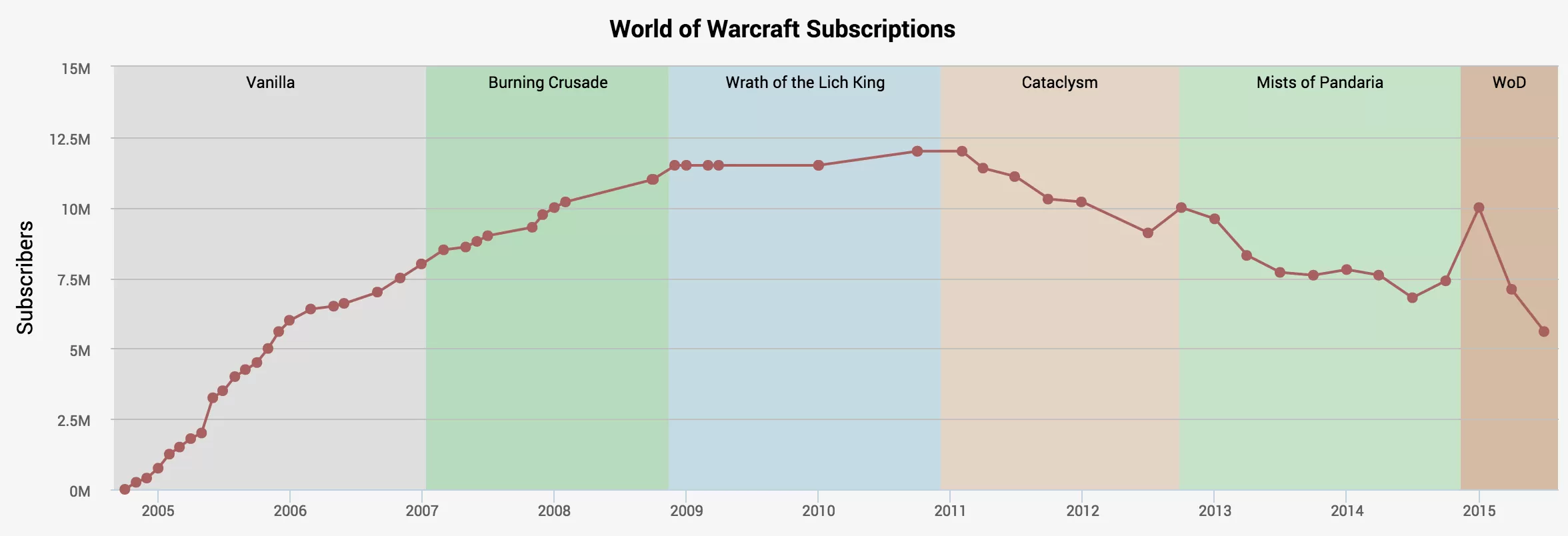 Figure 1: World of Warcraft subscriptions count, from 2004 to 2015.
Many WoW veterans cherish memories from the pre-Group Finder days, viewing it as the game’s golden age. Modern conveniences, while beneficial, can sometimes overshadow invaluable experiences. Notably, many of WoW’s players quit after the addition of the Group Finder; growth plateaued and declined.
Real-World Implications: The Trade-Offs and Psychological Impacts
Drawing parallels from the World of Warcraft case study, it’s evident that convenience, while beneficial, can sometimes dilute or remove the essence of what made an experience special. As we delve deeper into the digital age, these technological conveniences touch every corner of our existence, from casual chats to deep-seated relationships.
But as we embrace this digital shift, it’s crucial to recognize the potential trade-offs and the profound psychological effects they might introduce. If in a game, players might stop playing, what happens when we apply this convenience-driven approach to real life?
Friendships in the Digital Landscape: Platforms like Facebook and Instagram have revolutionized how we connect. While they’ve bridged vast geographical divides, they’ve also subtly shifted the dynamics of our interactions. The constant stream of notifications and updates, while keeping us informed, can sometimes overshadow genuine, in-the-moment interactions. The irony is palpable: in a world more connected than ever, feelings of isolation and the fear of missing out loom large. And as we navigate this digital realm, the act of sharing evolves. We’re no longer just sharing our experiences; sometimes, we’re tailoring our experiences for sharing, seeking validation through likes and comments.
The New Age of Social Interactions: The way we meet people and form bonds has seen a digital overhaul. The serendipity of meeting someone at a cafe or through a friend is now complemented (and often overshadowed) by the swipe culture of dating apps. While these platforms promise a plethora of choices, they often strip away the subtle nuances of face-to-face interactions. Those intangible cues, like body language, tone, or even the natural “synchronization” highlighted in research, get lost in the mix. And with an abundance of choices comes its own set of challenges, like decision paralysis and the nagging feeling that there’s always a better option just a swipe away.
Intimacy in the Digital Era: Platforms like OnlyFans, along with the ubiquity of pornography, have introduced new dynamics in the realm of intimacy. While they offer a semblance of connection, they can sometimes replace genuine intimacy with a more superficial alternative. This shift can lead to skewed perceptions of what intimacy truly means, with personal connections sometimes reduced to mere transactions.
While the consequences of technology may seem evident at first glance, it’s essential to investigate the empirical evidence. Do these trends find empirical support ?
Empirical Evidence: Numbers Speak
The following statistics offer a stark reflection of the profound ways in which technology, especially social media, has influenced individual and societal behaviors.
Loneliness, Suicidality, Depression, and Anxiety
The digital age, while bringing people closer in some ways, seems to have exacerbated feelings of isolation in others. A staggering 30% of younger american men reported not spending time with someone outside their household in the past week. This sense of detachment is further emphasized by the 48% of american men who find their online lives more fulfilling than their offline ones. The ramifications of this digital shift are evident in the dwindling social support systems, with only 22% of american men having three or more close local connections.
Depression and anxiety, too, have seen a concerning surge. A significant 40% of all american men exhibit depressive symptoms, and a chilling 44% reported suicidal thoughts in the preceding two weeks. The younger demographic, aged 18 to 23, appears to be the most affected, with diminished optimism for their futures and a poignant 65% feeling that no one truly knows them.
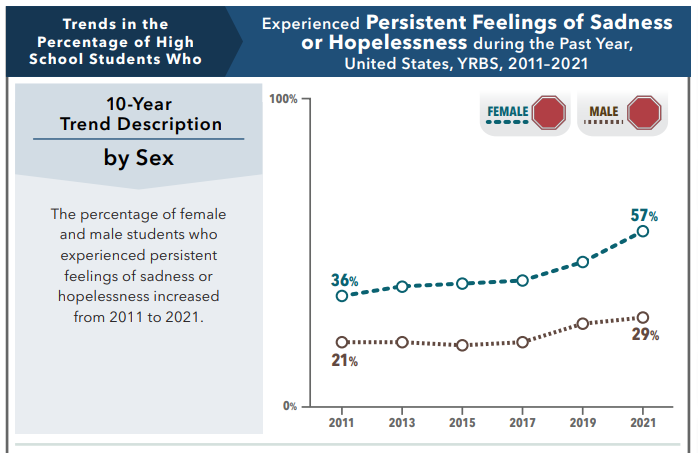
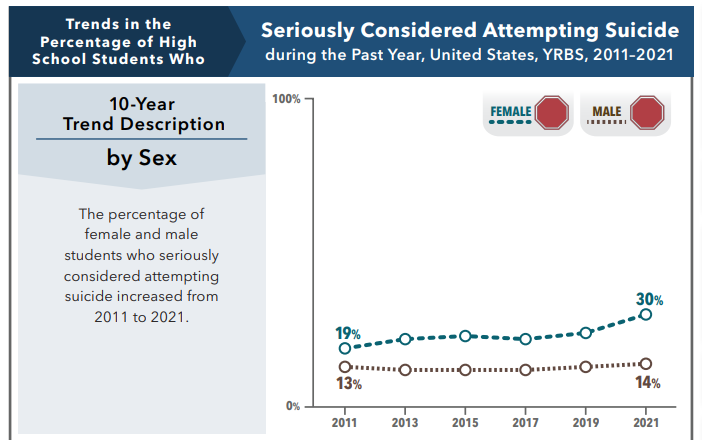
The trend isn’t gender-exclusive. For US girls, aged 15 to 19, there has been a 62% rise in hospital admission for non-lethal self harm since 2009. Among pre-teens aged 10 to 14, the increase is 189%. Furthermore, between 2011 and 2021, american females reporting persistent sadness rose from 36% to 57%, and males from 21% to 59%. The data on suicidal considerations is equally alarming, with a notable increase among females from 19% to 30%.
 |
 |
|---|---|
| Figure 2: Persistent feelings of sadness or hopelessness (2011-2021) | Figure 3: Seriously considered attempting suicide (2011-2021) |
Social interactions, or the lack thereof, further compound these feelings. The percentage of US teens meeting friends only once a month or less has doubled since 2010. This decline in real-world interactions correlates with a rise in individuals feeling disillusioned with life.
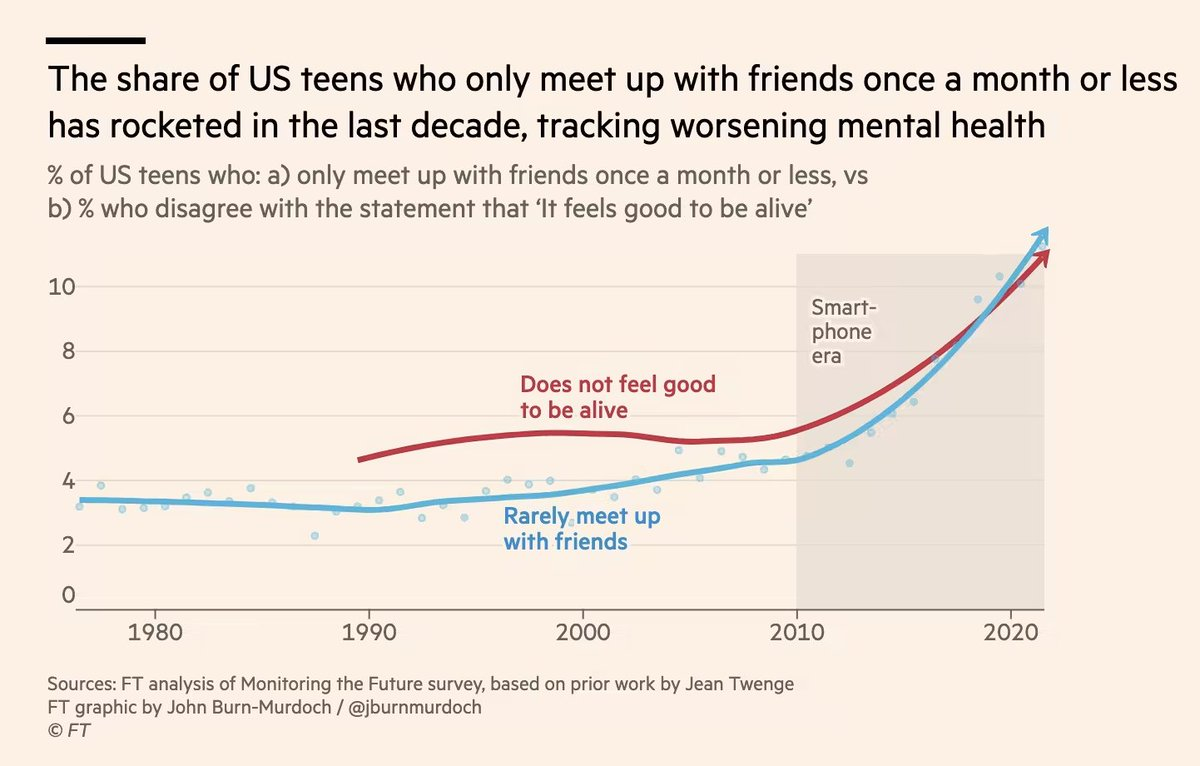 Figure 4: Share of US teens reporting they “rarely meet up with friends” and “does not feel good to be alive” from 1980 to 2020.
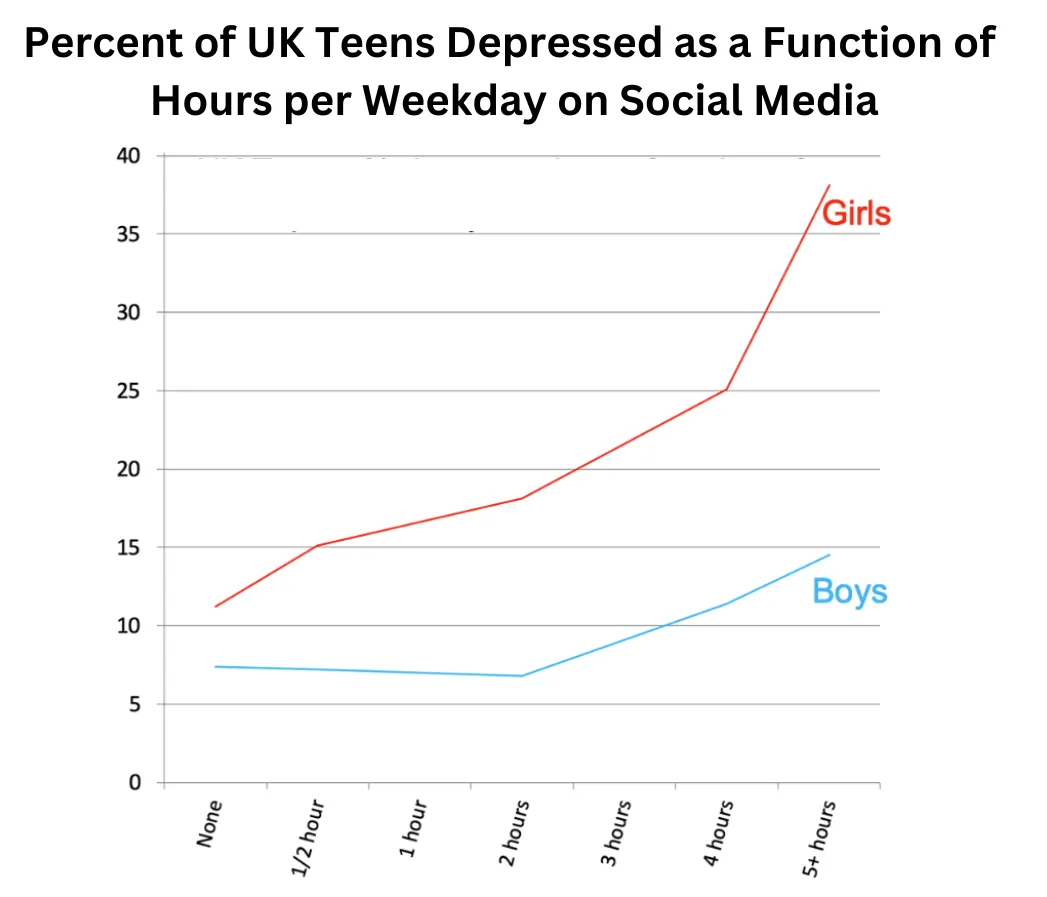
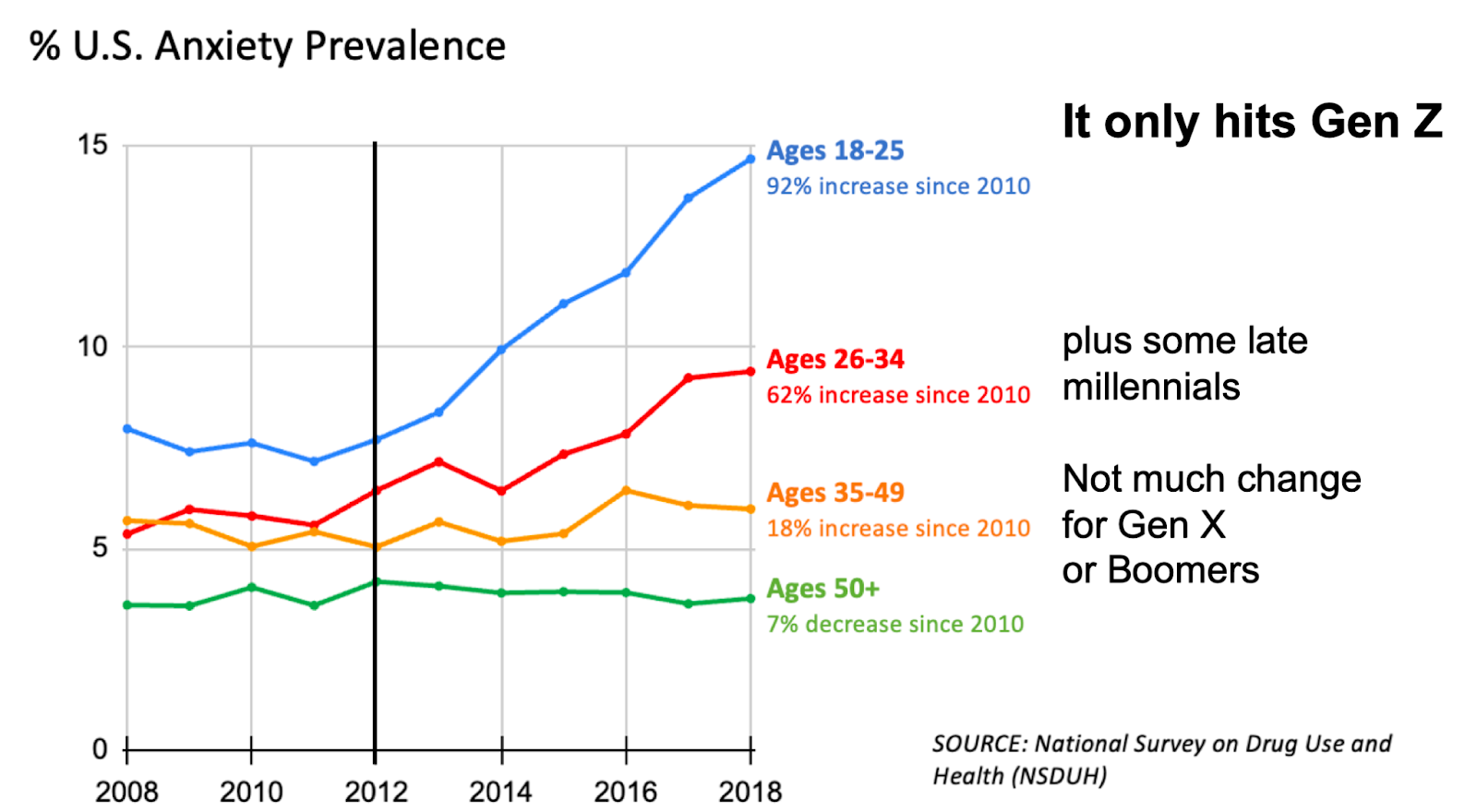
The influence of social media on mental health is undeniable. Charts indicate a direct relationship between time spent on social media and the prevalence of depressive symptoms, especially among females. Furthermore, anxiety levels have skyrocketed since 2010, with younger age groups experiencing the most significant increases.
 |
 |
|---|---|
| Figure 5: Depressive symptoms vs social media use | Figure 6: Anxiety prevalence in the US (2008-2018) |
Relationships
The digital age has also reshaped the landscape of personal relationships and intimacy. A significant 60% of american men visit pornographic sites weekly, suggesting a shift towards virtual forms of intimacy. Furthermore, a whopping 20% of american men report not seeking relationships, indicating a potential disconnect in forming genuine bonds. This figure rises to 30% when focusing on 18-23 year olds. 6% of men also report being unable to find sexual partners.
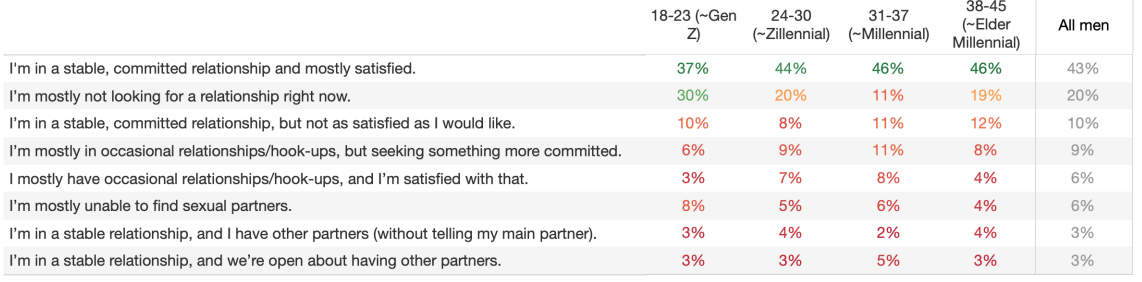 Figure 7: Proportion of US men across age categories who chose each description of their relationship status. Source: Equimundo.
Risk Aversion
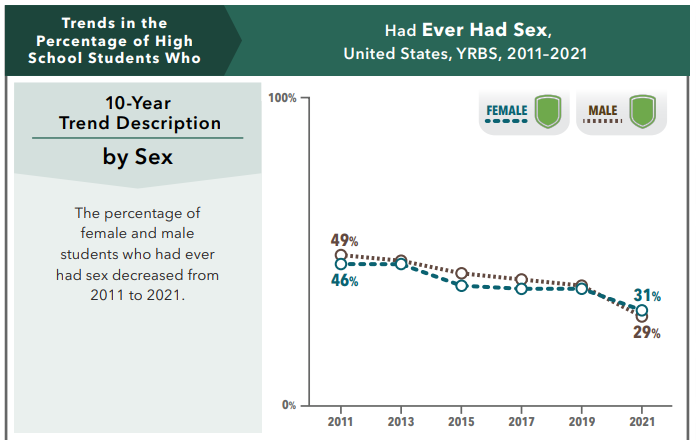
Interestingly, the digital era has also influenced risk-taking behaviors among the youth. Charts indicate a decline in traditional adolescent experiences. For instance, the percentage of high school students reporting sexual experiences or alcohol consumption has seen a noticeable drop from 2011 to 2021. This trend might suggest a shift in youth priorities or perhaps a heightened sense of caution in the digital age.
 |
 |
|---|---|
| Figure 8: High schoolers reporting having ever had sex | Figure 9: High schoolers reporting having drank alcohol |
In synthesizing this data, a pattern becomes clearly evident. Young individuals are becoming more risk averse, aren’t seing their friends or engaging in romantic relationships, and their mental health is suffering as a consequence.
Conclusion
In our journey through the digital landscape, we’ve grappled with a central question: How does the convenience of technology impact human experiences? From the virtual realms of World of Warcraft to the tangible shifts in societal behaviors, we’ve observed the profound ways in which technology, especially social media, has influenced our lives. While it offers connectivity and conveniences, it also poses challenges, sometimes diluting or irreversibly changing the very essence human interaction.
The empirical evidence paints a vivid picture. Just as players quit World of Warcraft after removing that innately human friction, young individuals are quitting real life. Rising feelings of loneliness, shifts in relationship dynamics, and altered risk behaviors among the youth underscore the multifaceted impact of our digital engagements.
Yet, the digital age is here to stay. Technology, and the double-edged sword of it’s consequences will continue to advance. Thus, we must ask ourselves an important question: how do we leverage the many benefits of technology while bulwarking ourselves from its negative effects?