Is the human mind made of three parts?
Introduction
Much of human suffering today is caused by problems of the mind. Loneliness, anxiety, and drug addiction are all contemporary diseases and mental illness is rising in many parts of the developed world. If we better understood the functioning of the human mind, we could solve many of these problems, thus alleviating much suffering, and create a better functioning society.
However, understanding the human mind is no easy task. Many models of the mind have been proposed throughout the ages, from Plato to Aristotle to Freud and Jung and more. This multitude of models seems to indicate that there is no definitive answer. If we cannot develop a true and useful model of the human mind, the next best thing is an untrue, yet useful model.
The purpose of this article is to present such a useful untrue model. I will draw parallels between a model of the human mind developed about 2500 years ago by Plato, and a schematic neuroscientific model developed in the 1970s by Paul McLean and show how a simple three-part separation of our minds can provide deep insights.
Plato’s Tripartite Soul
Plato in many respects was the first psychologist because he was one of the earliest thinkers to propose a model of the human mind. He begins by claiming that the human soul is tripartite, and each part has its own appetite and form of pleasure. Plato claims in Book 9 of the Republic:
“One part, we say, is that with which a man learns, one is that with which he feels anger. But the third part, owing to its manifold forms, we could not easily designate by any one distinctive name, but gave it the name of its chief and strongest element; for we called it the appetitive part […] ”
He gives form to these three parts:
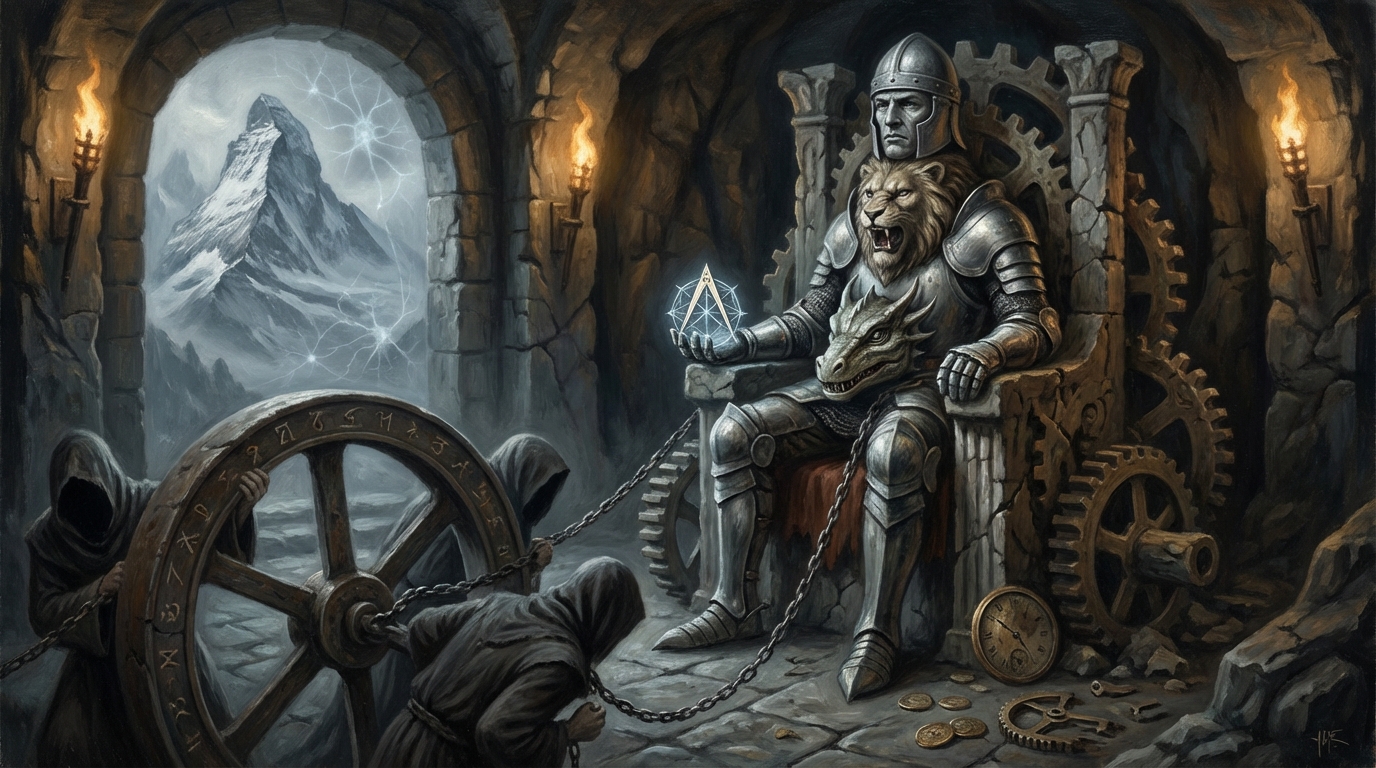
- The Man: The part that is used in learning is a man and the man endeavors towards knowledge of the truth of things. The man can acquire knowledge of the forms and can therefore understand what is good and what is bad.
- The Lion: The part that feels anger is a lion. The lion is wholly set on predominance, victory, and good repute. This is therefore the part of man that accounts for one’s position in the social environment, and the congruence of one’s behavior with the prevailing social norms.
- The Chimaera: Finally, the appetitive part is a many-headed beast such as a Chimaera. The beast is driven towards the gratification of its desire for food and drink and sex (and money which enables to previous three). The many heads also indicate that the Chimaera can be driven towards multiple object simultaneously, resulting in inner conflict.
If the human soul is composed of these three parts, which part should rule the others? Plato explains that the little man, the wisdom loving part, must be the ruler of the others because it can orient man towards the ultimate good, whilst satisfying the honor-loving parts desire for a good reputation, and the appetitive parts’ insatiable drives. Indeed, he explains that if the lion or the beast governed, it would be unable to satisfy its own and the other parts proper desires and would constrain the other parts to pursue an alien pleasure.
If the wisdom-loving part, the rational part should rule, how should this be done? Plato propose the following:
“[one] should tend to give the man within us complete domination over [our entire being] and make him take charge of the many-headed beast—like a farmer who cherishes and trains the cultivated plants but checks the growth of the wild—and he will make an ally of the lion’s nature, and caring for all the beasts alike will first make them friendly to one another and to himself, and so foster their growth.”
And so, man should befriend the lion, and weed-out those drives that are destructive, while tending to those that can serve our purpose.
The Triune Brain
Plato’s model, for a model proposed 2500 years ago, seems incredibly accurate, at least from a subjective point of view. Interestingly, many aspects of the model seem to coincide with a neuroscientific understanding of the brain and its functions proposed by Paul D. Maclean. Maclean calls his model the triune brain referencing the amalgamation of three basic brain formations: the so-called R-complex, the limbic system and the neocortex.
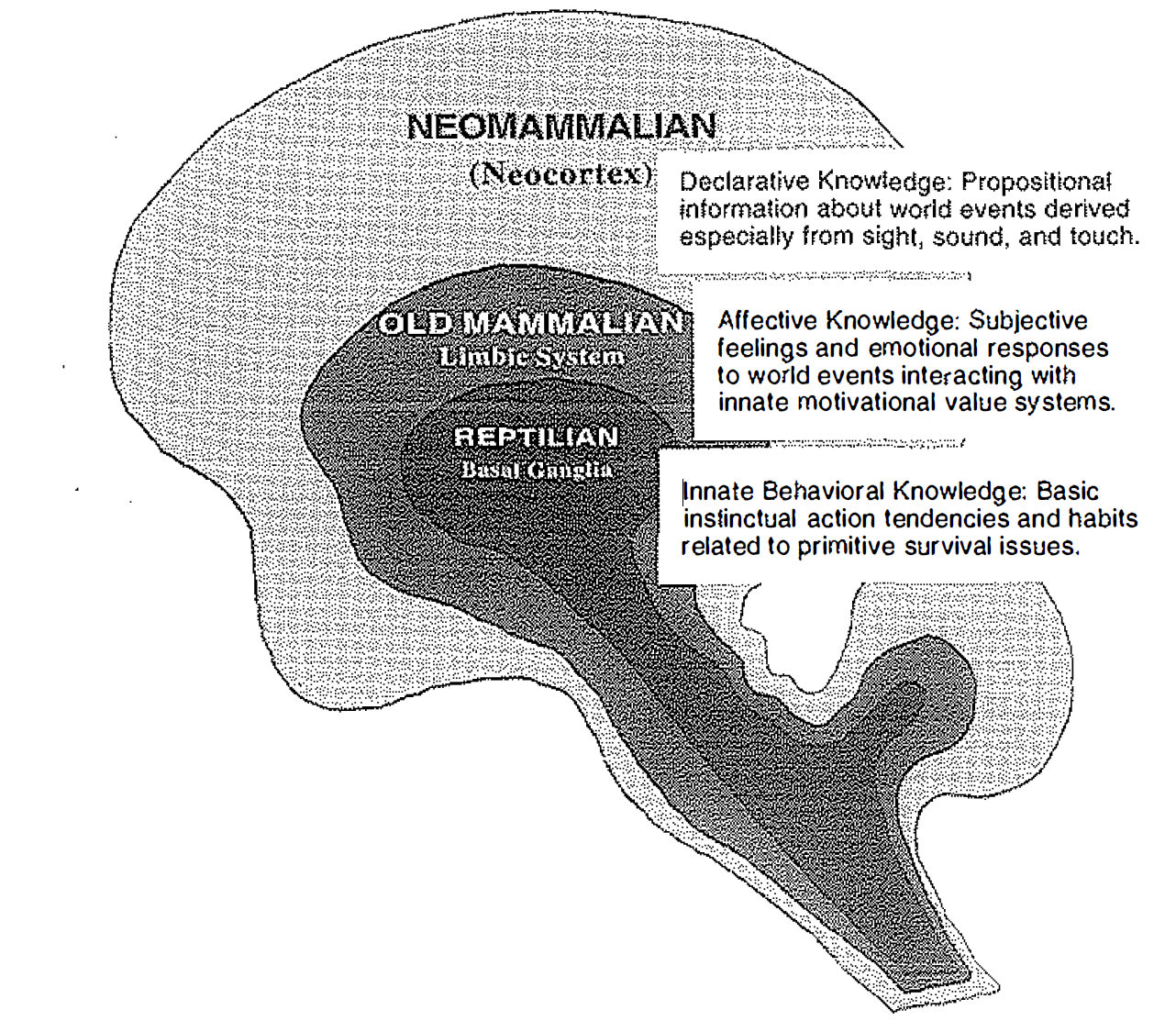 Figure 1: A highly schematic representation of MacLean’s triune brain concept.
The word triune implies that the whole is greater than the sum of its parts because the exchange of information among the three parts generates a greater amount of information than if each were operating alone. These three parts communicate heavily, nevertheless Maclean attempts to outline the core functions of each part.
- The R-complex: The deepest and most ancient part of the brain is the R-complex, also known as the basal ganglia. The basic reptilian core is of similar relative size in all mammals if we account for body size. This layer appears to govern basic behavioral routines, instincts, or drives, such as bodily eliminations, seeking shelter and food, and displays such as courtship, aggressive challenges, and submissive displays.
- The Limbic System: The next layer, which surrounds this reptilian core and connects with it at multiple points is the limbic system. While the limbic system is comparatively small in reptiles, it is large in all mammals. The limbic system provides modulatory control over behaviors elaborated by the reptilian complex. In addition, it is essential in elaborating a plethora of emotional processes like pro-social behaviors such as maternal nurturance, social bonding, separation distress vocalizations and playfulness.
- The Neocortex: The final layer is the neocortex, which surrounds these ancient subcortical regions and varies in size and complexity among mammalian species. In humans the neocortex is the storehouse of our cognitive skills and is the source of our rational thought.
Coherence between Models
Thus, there seems to be incredible coherence between Plato’s and MacLean’s models. The instinctual appetitive Chimera could rise from the drive governing R-complex, the socially aware and reputation loving Lion could gain its power from the limbic system, and the rational man’s power of rationality seems to originate in our highly developed neocortex.
Of course, the correspondence is not one to one. Plato’s model has the advantage of being highly rememberable and simple, yet limited in that each part is entirely independent of the other. MacLean’s model can also illustrate how our instincts, emotions and reason can be at odds, however it can also show how they work together and elaborate, and enhance each other.
For example, the instinct for food may emanate from the R-complex, but we do not experience hunger as an instinct. Indeed, hunger, in the absence of a food source, becomes colored with emotion. We may begin feeling fear, or panic if we do not find any. What’s more, our rational mind begins racing producing strategies of how food may be found now, and how this situation may be prevented in the future.
Conclusion
In conclusion, whereas these three entities seem to be entirely at odds in Plato’s model, they seem to work mostly together in MacLean’s. An instinct is elaborated on: colored by emotion and then described by logic.