Why we should move away from unidimensional politics to heal our fractured society
Introduction
Everyone, men and women, young and old, and even conservatives and liberals, want to live a peaceful, prosperous, happy, and healthy life. To achieve such a life, we all want to live in a society that is safe, just and provides us with opportunity. It is easy to imagine that at such a basic level, no matter the faction, group, or ideology one subscribes to, we are all in agreement. Indeed, this basic vision transcends societal dichotomies, most notably political beliefs because this vision is about the basic building blocks to a fulfilling human life.
However, despite such “easy to agree on” goals, we are witnessing increasing polarization, particularly political polarization, in our societies. Pew Research has shown that in 2014, 92% of republicans were more conservative than the median democrat, and 94% of democrats were more liberal than the median republican. In 1994, only 64% of republicans and 70% of democrats were more conservative or liberal than their respective counterparts. This trend is also illustrated in Figure 1, where we see the ideological distributions of democrats and republicans pulling increasingly apart.
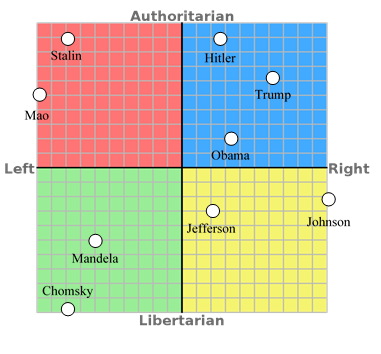 Figure 1: Illustration of the evolution of political beliefs from 1994 to 2014 in the USA, from the Pew Research Center.
The cause of this polarization is multi-factorial, and one now trite explanation is the increasing siloing of individuals into various “filter bubbles” on online platform. The causes that have led society to this point are important and require their own analysis. Instead, I will take our current situation as given and ask: how do we bridge the increasingly large divide between the various emerging factions in our society today?
I propose that the key to peace in any shared space, whether it be a household, an institution, or a country is threefold. First, a group must have shared goals. Second, group members must be equipped with a detailed understanding of one another’s point of view. Third, group members must be able to tolerate differences in opinion, should they exist. Furthermore, I propose that tolerance naturally follows from the first and second propositions.
In this essay, I will attempt to provide readers with useful tools that can help them with the second point outlined above: how to better understand one another’s points of view. To begin, I will give a general overview of the left-right political spectrum and of the beliefs generally classified as left leaning and right leaning.
The left right political spectrum
The left-right political spectrum is a system of classification of political ideas, ideologies, and parties. The terms “left” and “right” have their origins in the French revolution of 1789, where those who supported the king were seated to his right, and those who supported the revolution were seated to his left and to this day “movement” is associated with the left and “order” with the right.
Indeed, the political right is characterized by an emphasis on notions such as duty, tradition, order, authority, hierarchy, reaction, and nationalism, but also property rights, capitalism, individualism, limited government, and laissez-faire economics. The left on the other hand is characterized by an emphasis on ideas such as equality, fraternity, freedom, progress, rights, reform, and internationalism, and also socialism, collectivism, government social and welfare programs and more centrally planned economics.
The left-right political spectrum today constitutes an amalgam of social and economic issues and it is not uncommon to see far-right and far-left parties – who could not be more opposed on social issues – align on economic policies and vice-versa. For example, Marine Le Pen and Jean-Luc Mélenchon – far-right and far-left candidates of the 2017 French Presidential election – shared many economic ideas such as nationalizing highways, lowering the age of retirement, and selective protectionism measures.
I ask therefore: is the left-right dichotomy sufficient? Shouldn’t we separate the social and economic dimensions to better categorize and understand various political currents?
Two-dimensional political classification
I am of course not the only one to ask this important question. Political scientists, beginning at least in the 1950s, have frequently noted that a single left-right axis is far too simplistic to describe the multitude of political beliefs that exist. Thus, researchers such as Leonard W. Ferguson, Hans Eysenck or Milton Rokeach devised two dimensional categorizations of political beliefs where, broadly speaking, they separate the economic from the social dimension. A recent example of work in this vein is the “Political Compass”, which was created by unknown authors. Figure 2 shows a reproduction of the political compass.
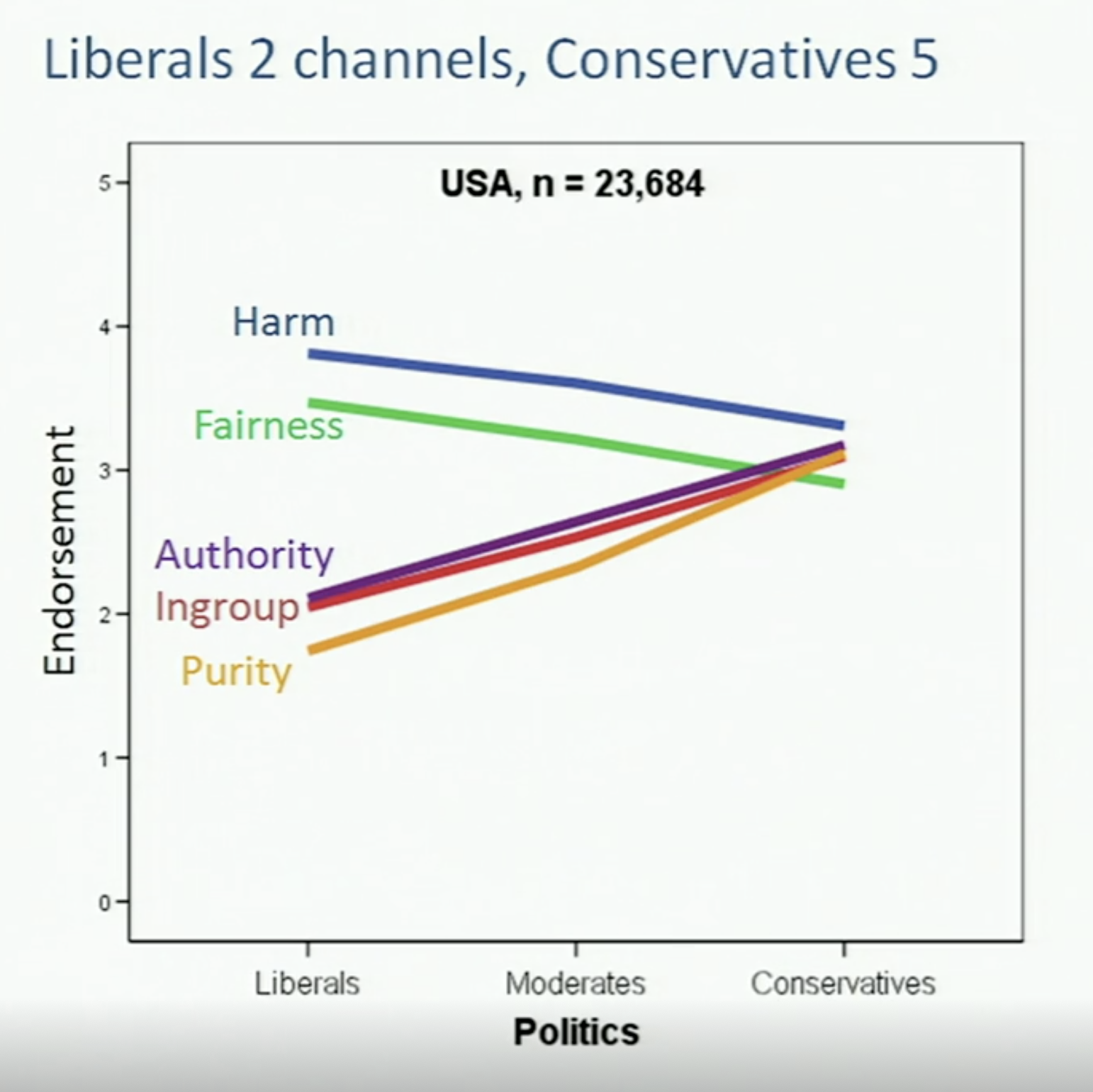 Figure 2: Representation of the two-axis political compass chart with a selection of political leaders.
The horizontal axis represents socio-economic beliefs. The left of the axis represents the belief that the economy should be run by a cooperative collective agency such as the state, or a network of independent communes, whereas the right of the axis represents the wish for the economy to be left to the devices of competing individuals and organizations, i.e., to the invisible hand.
The vertical axis represents socio-cultural beliefs such as the amount of freedom one would allow. The bottom of this axis, libertarianism, characterizes the belief that personal freedom should be maximized, whereas the top of the axis, authoritarianism, characterizes the belief that authority should be obeyed.
These two axes create 4 categories: libertarian left and right, and authoritarian left and right, however these categories are not discrete, but regions along a continuum. Two-dimensional representations like the political compass can increase our understanding of others political orientations. They also help us appraise the fine-grained differences between various political leaders and political parties. However, these representations cannot help explain the increasing polarization in our societies because they do not explain the origins of our political beliefs.
Indeed, politics, at a fundamental level are about morality, because politics are about building a good society, and it is our moral values that guides us towards what is good. Therefore, if we can understand the various dimensions of one another’s morality, we can better understand the reasons for certain political ideas. Understanding each other, and building bridges towards those we disagree with is of utmost importance because we have gotten to a point where it is as if one side cannot see what the other side sees, leading to demonization, and even dehumanization.
Moral foundations
An intuitive and useful tool to understand the origins of our moral intuitions, which undergird our political beliefs was developed by Jonathan Haidt, a social psychologist at NYU Stern. This tool, or rather this theory, is called Moral Foundations theory. It is constituted by 6 dimensions: Harm/care, Fairness/reciprocity, Ingroup/loyalty, Authority/respect, Purity/sanctity, and Liberty/oppression which is the newest addition to the theory.
What Haidt has shown is that those on the left (i.e., Liberals) and those on the right (i.e., Conservatives) rely on different moral foundations, which explains why one side cannot understand the other. Figure 3 shows the degree to which liberals and conservatives rely on the five initial foundations in their moral reasoning.
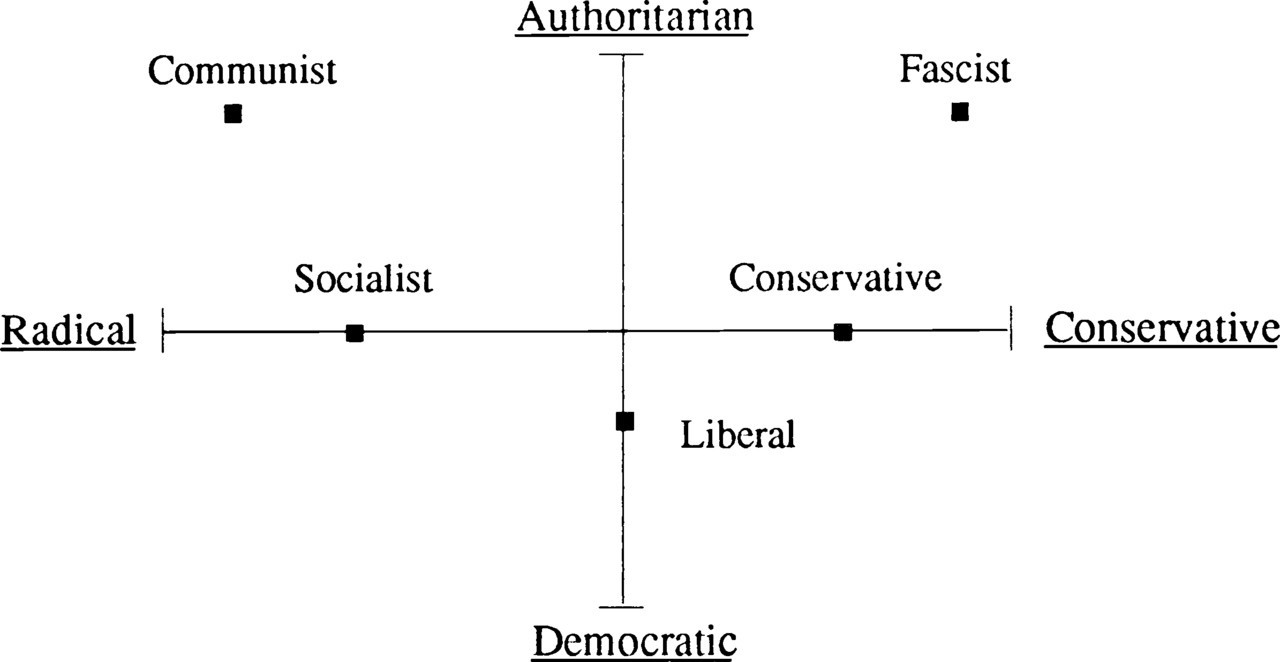 Figure 3: a graphic depicting survey data from 23,684 survey respondents in the USA, demonstrating that liberals and conservative rely on different moral foundations.
Short Explanation of the moral foundations
- Harm/care: This foundation has its roots in the mammalian feature of caring for our young. Mammals are sensitive to signs of suffering in their offspring and in humans, this proclivity has extended to the suffering of others. People therefore feel approval towards those that relieve or prevent harm.
- Fairness/cheating: Life is a series of opportunities for mutually beneficial cooperation, which is the origin of this moral foundation. In society, this module takes on two flavors: fairness in outcome (i.e., equality), and fairness in procedure (i.e., proportionality).
- Loyalty/betrayal: Group warfare has been a constant feature of the human story. We defended our tribe against attacks and engaged in wars against other tribes seizing territory and resources. Our species has faced this adaptive challenges for millions of years and it is the tribalists, those that banded together, not the individualists who survived.
- Authority/subversion: Mammals live in groups and in many species these groups contain social hierarchies. Authority is not power, and it largely depends on prestige, competence, and voluntary deference. Authorities fulfill many socially beneficial functions such as group leadership.
- Sanctity/degradation: The sanctity/degradation foundation originates in the emotion of disgust. In humans, disgust is not limited to food and is part of the “behavioral immune system” causing us to avoid those afflicted by disease and infection. This reaction has been exapted, causing us to view some things as polluted and others as sacred.
- Liberty/oppression: For much of our history, humans have lived in hunter-gatherer tribes. Sometimes, one individual began dominating others, coercing them, and limiting their freedom. This caused the tribe to band together against this individual. Today, this foundation is related to concerns over individualism, freedom from coercion, and an aversion to imposing any particular moral code upon others.
Conclusion
To conclude, I propose moving beyond one, and two-dimensional political classifications to focus on the deeper reasons for our beliefs. Indeed, because at the most basic level we all desire a society that provides us with safety and opportunity, understanding why people hold certain beliefs can help increase tolerance for diverging ideas, create bridges, and renew our sense of shared community which is becoming increasingly important today.