I. Introduction
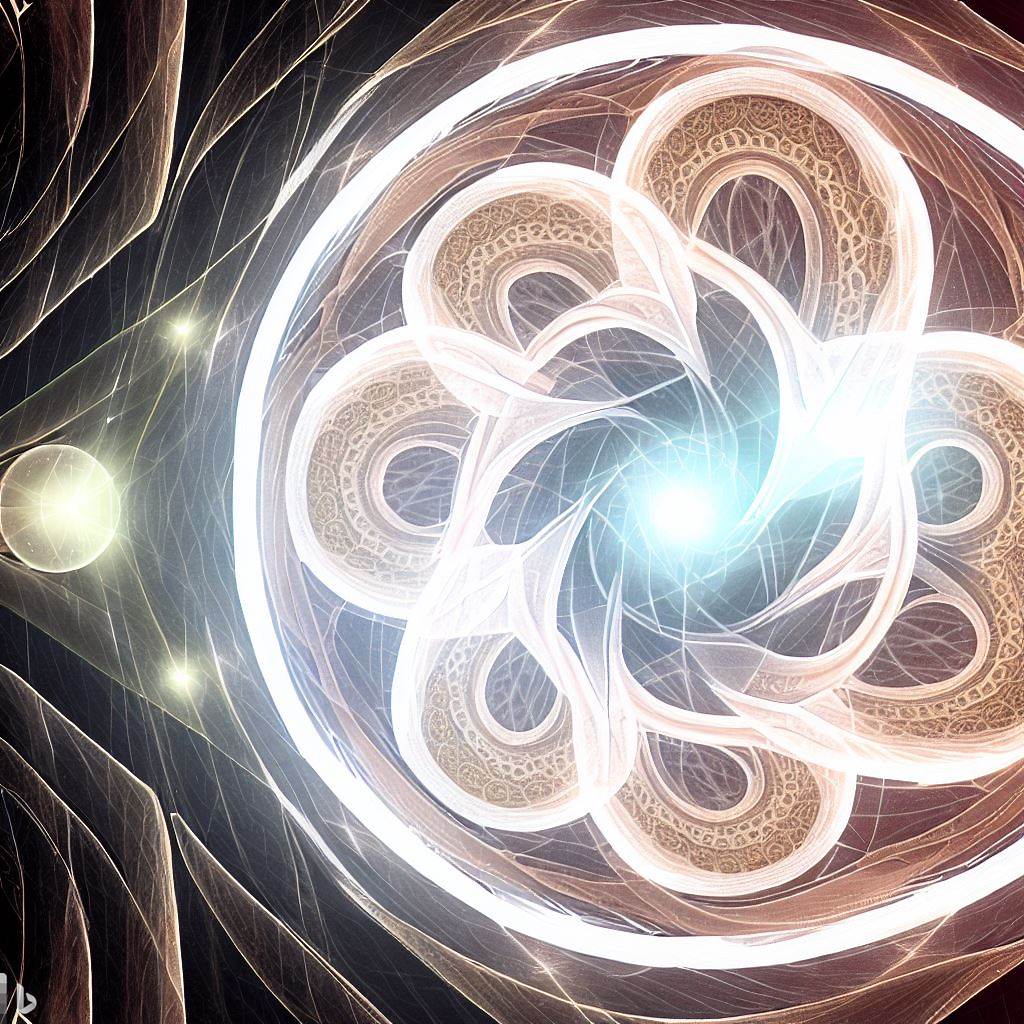
When we gaze at a snowflake, marvel at the intricate pattern of a fern leaf, or admire the sweeping branches of a tree, we are, perhaps unknowingly, appreciating the beauty of fractals. Fractals are complex patterns that are self-similar across different scales - they look the same no matter how close you zoom in or how far you zoom out. This mathematical concept, first brought into the spotlight by the mathematician Benoit Mandelbrot, has found relevance in a myriad of fields beyond its mathematical origins, from computer graphics to economic models, and from physical phenomena to the structures of social systems.
A fractal pattern is one where the whole reflects the part - a quality known as ‘self-similarity’. It’s like a set of Russian dolls, where each smaller doll is a miniature copy of the larger one it came from. This self-similarity can extend infinitely, producing an intricate complexity that is both mesmerizing and profound. The more you delve into a fractal, the more detail is revealed, echoing the infinite nature of the pattern.
Fractals are not just abstract mathematical constructs or patterns we see in nature; they hold a mirror to the very structure of our existence, from the microcosm of our inner selves to the macrocosm of our societies and beyond. The purpose of this blog post is to explore this idea - to journey through the fractal nature of our world and perhaps gain a deeper understanding of ourselves and our place within it. So, let’s embark on this journey together, and discover the hidden fractals in our universe.
II. Fractals and the Self
Just as fractals permeate the physical world, they also echo within us. When we explore the concept of the ‘fractal self’, we delve into the intricate, multi-layered nature of our identities. Like a fractal brimming with infinite patterns, each of us is a complex weave of motivations, desires, experiences, and perspectives that collectively mold our unique identity.
Imagine your mind as a bustling city, populated by numerous micro-personalities - your motivations, desires, and aspirations. Each of these micro-personalities is like a citizen living within you, each with its own voice, its own needs, and its own direction. They pull you towards different paths, creating a dynamic, ever-evolving landscape of thoughts, emotions, and actions. And just like a fractal, this landscape only grows more intricate and detailed the closer you look.
Yet, amidst this bustling city of micro-personalities, there emerges a center - your identity. It’s the place where all these micro-personalities come together, integrate, and form a coherent whole. It’s like the hub of a wheel, where all the spokes converge. This hub, this center of your identity, is what enables you to navigate the world as a unified self, even as you hold within you a multitude of desires and motivations.
Understanding and embracing this fractal nature of the self can have profound implications for our self-awareness and personal growth. When we recognize ourselves as complex tapestries of interwoven elements, we can appreciate our depth and complexity. We can acknowledge our contradictory desires and aspirations without feeling disoriented, and see our experiences as integral components of our fractal identity that shape us into who we are.
Moreover, acknowledging the fractal self can empower us to consciously shape our identities. Every aspect of our lives – every choice, every experience, every relationship – is like a thread that weaves into the fractal pattern of our identity. We can choose which threads to follow, which experiences to weave into our pattern, and which relationships to nurture, thus shaping the fractal pattern of our identity in a way that aligns with our values and aspirations.
In essence, embracing the fractal self is about acknowledging our own complexity, recognizing the beauty in our intricacies, and taking an active role in shaping our identities. It’s about seeing ourselves not just as a single entity, but as a dynamic, evolving pattern – a fractal within the vast fractal landscape of existence.
III. Fractals in Families and Communities
Just as individuals can be seen as fractals, so too can families and communities. After all, aren’t families a composite of unique individuals, each with their own identities, yet coming together to form a collective whole? Each member, with their distinct experiences, motivations, and aspirations, contributes to the larger, intricate pattern of the family. This family unit, with its shared identity, culture, and values, is a beautiful example of a fractal structure in the realm of human relationships.
Consider the dynamics within a family - the interplay of personalities, the ebb and flow of emotions, the complex network of relationships. Each member is simultaneously a part of the whole and a whole unto themselves, echoing the self-similar nature of fractals. The patterns of interaction, the shared experiences, the traditions - all of these elements weave together to form the fractal pattern that is unique to each family.
The fractal nature of human existence does not stop at the family level. Like a zooming fractal that reveals ever-larger patterns, families come together to form communities. Each community is a larger fractal structure, composed of many families, each with its own unique characteristics, yet bound together by shared values, customs, and traditions.
In a community, each family contributes its unique pattern to the larger fractal structure. The interactions between families, the shared community experiences, the collective cultural practices - all these elements interweave to form the complex, self-similar pattern of the community. And just like in a fractal, every part of the community - every family, every individual - is integral to the whole.
Understanding our families and communities as fractals can have profound implications for how we relate to each other. It can foster empathy, as we recognize the complexity and uniqueness of each family and individual within the community. It can inspire collaboration, as we see how each part contributes to the whole. And it can cultivate a sense of belonging, as we see ourselves not just as isolated units, but as integral parts of the larger fractal pattern of our community.
In the grand tapestry of human existence, we are all threads contributing to the intricate fractal patterns of our families and communities. And as we zoom out further, we see that these patterns do not exist in isolation. They interconnect and intertwine, forming even larger fractal structures that make up our societies.
IV. Societies as Super-Fractals
As we pull back our lens further, the fractal patterns of individuals, families, and communities converge into an even larger, more intricate pattern - that of societies. Each society is a super-fractal, a complex structure formed by many communities, each contributing their unique patterns to the collective whole.
In a society, each community, with its distinct customs, traditions, and values, adds to the richness and diversity of the societal pattern. Yet, despite this diversity, there is a shared identity and culture that binds everyone together. This shared identity acts as the central hub of the societal wheel, around which the many communities revolve.
The implications of viewing societies as fractals are profound. It offers a fresh perspective on social policy, suggesting that policies should respect the complexity and diversity of the societal fractal. The life of a society extends over timescales that are difficult for an individual human to grasp. It’s challenging to know with certainty if a certain way of life, or a set of beliefs, is superior to another. As such, a Westphalian view, akin to the principles established in the Treaty of Westphalia, might be appropriate, recognizing the sovereignty and diversity of each societal fractal.
Policies should aim to empower each community to contribute positively to the societal whole, while respecting their unique characteristics and needs. The true value of a society can be judged by its legacy and the flourishing of its citizens, rather than by a singular belief or way of life. This understanding could influence policy-making, fostering an environment that nurtures the unique fractal patterns within each society.
Finally, the fractal perspective on societies offers insights into global cooperation. Just as different parts of a fractal work together to form the overall pattern, different societies can collaborate to address global challenges. The intricate interconnections between societies - our shared human experiences, our intertwined economies, our interconnected ecosystems - reflect the self-similar patterns of a global fractal. Recognizing this can inspire global cooperation, as we see that our futures are interwoven in the complex pattern of the global fractal.
V. The Unifying Factors in the Fractal Hierarchy
As we’ve traced the fractal pattern from the individual, to the family, the community, and the society, you may have started to notice certain unifying factors. These elements are present at each level of the fractal hierarchy, acting as the glue that holds these complex systems together and guides their evolution.
Truth plays a pivotal role. It acts as a binding force that strengthens the bond between each lower level element and its corresponding upper level element. When an individual is true to their values, they resonate with their family. When a family is true to its shared principles, it aligns with the community. When communities are true to their collective goals, they harmonize with the society. This alignment through truth fosters a strong, healthy fractal structure at every level.
Love and empathy too, are fundamental forces at each fractal level. Love, in its essence, is a desire for the flourishing of the other. When each lower level loves and feels empathy towards the upper level, they contribute to it and desire its flourishing. Whether it’s an individual’s self-love or love for others, a family’s bond of love, a community’s shared empathy, or a society’s collective goodwill, these emotions foster interconnectedness and cooperation.
Cooperation is another recurring theme in our fractal hierarchy. At every level, the system thrives when its components work together. Whether it’s the various aspects of an individual’s personality, the members of a family, the families in a community, or the communities in a society, cooperation enables the system to function harmoniously and adapt effectively.
Interconnectedness is also a key principle at every level. Just as every part of a fractal is integral to the overall pattern, every individual, family, community, and society is interconnected in the grand fractal pattern of existence. This interconnectedness fosters a sense of belonging and reinforces the importance of each part to the whole.
Finally, consciousness is a unifying factor that permeates all levels. The individual’s self-awareness, the shared consciousness of a family, the collective consciousness of a community, the societal consciousness - all are manifestations of this principle. Consciousness allows each system to reflect on its experiences, make choices, and shape its fractal pattern.
These unifying factors not only contribute to the structure and behavior of systems at each level, but also provide insights into the principles that might govern the next level of our fractal hierarchy - the cosmos. As we explore in the next section, the cosmos itself can be viewed as a grand fractal, echoing the patterns and principles we’ve observed at smaller scales.
VI. The Higher Order Unification
Having traversed the fractal hierarchy from the level of the individual up to that of societies, we naturally find ourselves wondering asking: what lies beyond? Societies, each with their unique cultures and norms, come together to form civilizations. These civilizations, marked by shared history and collective ethos, are the amalgamation of numerous societies, each contributing to the vibrant complexity of the larger structure.
Just as communities unify to shape societies, societies converge to form civilizations, civilization too merge creating a more extensive and intricate fractal - global humanity. This concept of global humanity represents a collective consciousness, a shared repository of experiences, knowledge, and wisdom that transcends cultural and geographical divides. In essence, it is the global consciousness that binds humanity into a singular entity, a reflection of the fractal principle of self-similarity at a grander scale.
As we ascend further in the fractal hierarchy, we arrive at the cosmos. Here, we encounter a grand fractal on an almost unimaginable scale. The cosmos, with its galaxies, celestial bodies, and the interstellar voids, manifests the fractal pattern on a level beyond human comprehension. Yet, the principles of self-similarity, interconnectedness, and infinite complexity, observed at every preceding level of the fractal hierarchy hold true even here. And just as lower levels unified, so too must this highest level.
This brings us to the conclusion that an ultimate unifying factor in the fractal universe must exits. In many religious and theological perspectives, this concept is known as God. However, this idea is not limited to theological or religious perspectives. Instead, it can be seen as the original source and ultimate destiny of all fractal patterns in the universe, the final piece that completes the cosmic puzzle. God can be seen as the absolute unity that underlies and permeates all of existence. This divine presence could be viewed as the source of the fractal patterns we observe, the fundamental principle that guides their evolution, and the ultimate unity that binds them together.
From this viewpoint, God is not separate from the universe but is present in every part of it, reflecting the self-similarity principle of fractals. Just as every part of a fractal contains the whole pattern, every part of the universe contains the divine essence. This understanding can inspire a sense of awe and reverence, and foster a deep sense of connection with all of existence.
This exploration of the fractal universe and its unifying factors provides a fresh perspective on our place in the cosmos and our interconnectedness with all of existence. It invites us to reflect on the profound implications for our understanding of ourselves, our relationships, our societies, and the cosmos. As we conclude in the next section, we’ll explore how these insights can shape our actions and decisions, and guide us towards a more harmonious and fulfilling existence.
VII. Conclusion
As we reach the conclusion of our exploration, we bring together the threads of our discourse, weaving them into a coherent pattern. We’ve journeyed from the individual self to families and communities, then societies, and even the cosmos, observing the fractal patterns that manifest at each level. We’ve contemplated the unifying factors that resonate through these levels, culminating in the ultimate unity that some call God.
Reflecting on the fractal nature of existence has profound implications for our understanding of ourselves and our place in the cosmos. The self-similarity principle of fractals suggests that we, as individuals, contain within us a reflection of the entire universe. Through the lens of fractals, we gain a new perspective on the power of individual actions in shaping societal change, a concept we can call the ‘Fractal Theory of Social Change’. Small changes at the individual level, whether in attitudes, behaviors, or values, can propagate upwards through the fractal hierarchy, causing larger shifts at the societal level. Much like altering a part of a fractal pattern can change the entire design, our individual actions have the potential to catalyze change in our communities and societies.
In conclusion, the fractal universe presents an awe-inspiring tapestry of complexity and unity. As we navigate through our lives, let us keep these insights in mind. Let us reflect on how we can embody these principles in our actions, relationships, and decisions, as alignement within ourselves can propagate and contribute to the alignement of the whole.
As you continue your journey beyond this article, I invite you to contemplate these ideas further, to see the world around you through the lens of fractals, and to find ways to apply these insights in your own life as you are both a creator and a creation of this fractal universe.